Sowell Bay
Remarkably Bright CreaturesSowell Bay is the coastal setting where ordinary routines meet unresolved histories: its aquarium provides Tova Sullivan with night work, while its pier and surrounding waters hold the last known traces of Erik Sullivan and, years later, clues that alter Cameron Cassmore’s search for family. The town’s waterfront is not merely scenery. The ferry dock, ticket booth, nearby marina, and sea give separate lives a shared geography, and the tide and depth determine what can be lost, preserved, or returned.
Waterfront Setting
The Sowell Bay Aquarium faces the Old Sowell Bay Ferry Dock, an aging structure whose crumbling pilings are crusted with barnacles. At high tide, seaweed catches on them; when the water recedes, it dries into dark residue. The dock is described as a decaying machine, a working remnant beside the aquarium rather than a polished attraction. The pier’s weathered planks lead past a ticket booth with a diagonal crack in its glass to a bench exposed to salt spray and gull droppings.
The waterfront’s condition shifts with weather and tide. Rain rattles the aquarium skylight during a gray June, and security light from the old dock glints through it. On a later night, fog lifts and moonlight breaks across the water; a freighter lies anchored to the south, its stacked containers rising above a low hull. At the shoreline, a very low tide leaves shallow pools scattered across the exposed beach. Such changes make the coast a physical environment with its own rhythms, not a fixed backdrop for the characters’ memories.
Work and Nightly Routine
Tova is the Sowell Bay Aquarium’s oldest employee. Each night she mops floors, cleans the glass, and empties bins, earning fourteen dollars an hour before deductions. She collects her direct-deposit stubs from a break-room cubby but leaves them unopened in a shoebox above her refrigerator, while the money accumulates in an account at Sowell Bay Savings and Loan. Her employment gives the town’s aquarium a daily, practical presence in her life; the night shift also places her repeatedly beside the waterfront after other people have gone home.
Her routine extends from the aquarium to the pier. She keeps vinegar and lemon oil in her car trunk despite being told she can store them at work, on the chance they might come in handy. The old ferry dock stands across from the aquarium, and the ticket booth is exactly thirty-eight steps from her parking space. Tova checks for anyone lingering before approaching it, then sits on her usual bench and studies the round marks on her wrist, one already darkening into what she thinks of as a silver-dollar scar. The repeated walk turns a familiar public place into a private ritual, where the present-day town meets her continuing grief for Erik.
Erik’s Disappearance and the Pier
The dock and ticket booth are central to the last known circumstances of Erik’s disappearance. At eighteen, he was meant to lock up the booth after the eleven-o’clock southbound ferry, a summer job whose responsibilities pleased him. The deckhand on that final boat reported nothing unusual. When Erik failed to return, the sheriff initially treated the case as a possible runaway: the booth had been left unlocked, its register cash was accounted for, and Erik’s backpack, portable cassette player, headphones, and wallet remained beneath the chair. The possibility that he had stepped away intending to come back was considered, but never explained why he would leave while on duty.
A week later, a rusty Sun Cat was found washed ashore. It had gone missing from the small marina that used to sit beside the ferry dock; its anchor rope had been cut cleanly, and Erik’s fingerprints were on the rudder. The sheriff regarded the evidence as pointing to suicide, though it remained thin. The town’s geography thus supplies both a sequence of concrete clues and the limits of what those clues can establish: a boat can disappear from the marina, travel out of sight, and return without revealing what happened to its passenger. For Tova, the unresolved space between the ticket booth and the water remains inseparable from her son’s absence.
A Search That Returns to Sowell Bay
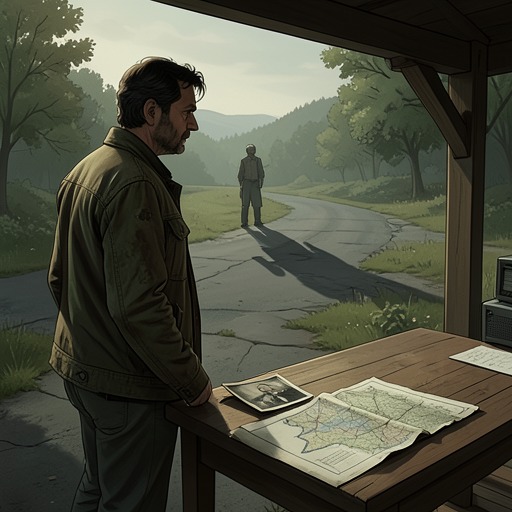
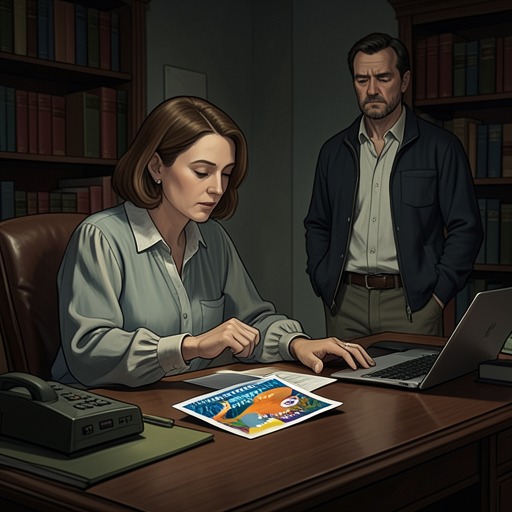
Years later, Cameron finds a photograph in a scanned high-school yearbook showing his mother, Daphne Cassmore, on a crowded pier with Simon Brinks. A caption identifies them, giving Cameron a name to pursue. Property records show that Simon owns three properties in the Sowell Bay area, so Cameron plans to begin his search there and looks for an inexpensive hostel nearby. His arrival makes the town a destination in a family investigation as well as the place where its older mystery remains unresolved.
The coast also holds material traces that connect those histories. As a juvenile beneath the sea, Marcellus encountered a circular ring with a copied key among fragments of human belongings: a rubber sneaker sole, a vinyl shoelace, and shirt buttons, gathered beneath rocks. He later recognizes the key as one Tova has lost and understands that it must belong to the person she mourns. The deep water has preserved objects while removing the bodies and explanations that might have made them legible; Marcellus’s recognition allows one small object to travel back from that hidden history to the woman who grieves.
Return and Narrative Significance
Near the end of Marcellus’s life, Tova carries him in a yellow bucket along the Sowell Bay waterfront toward the jetty. She is seventy years old, and he weighs about sixty pounds; gulls are the only witnesses as she wheels him past the waterfront at night. The tide is far out, leaving moonlit pools across the exposed shore. Their journey brings the aquarium’s captive animal back to the sea, while the coast’s changing waterline makes that release a passage through a real, physical landscape rather than an abstract escape.
Afterward, Marcellus swims from the rocks toward the depths, returning to the place where he found the key and where the remains of a beloved son have long since disintegrated. Sowell Bay’s sea therefore holds several kinds of history at once: the uncertain route of Erik’s final night, the physical remnants that survive underwater, and Marcellus’s own movement from captivity back to a habitat he recognizes as home. The town’s importance lies in this conjunction of the intimate and the unknowable. Its working waterfront gives the characters places to meet and search, but the sea can preserve a fragment without surrendering the whole story.